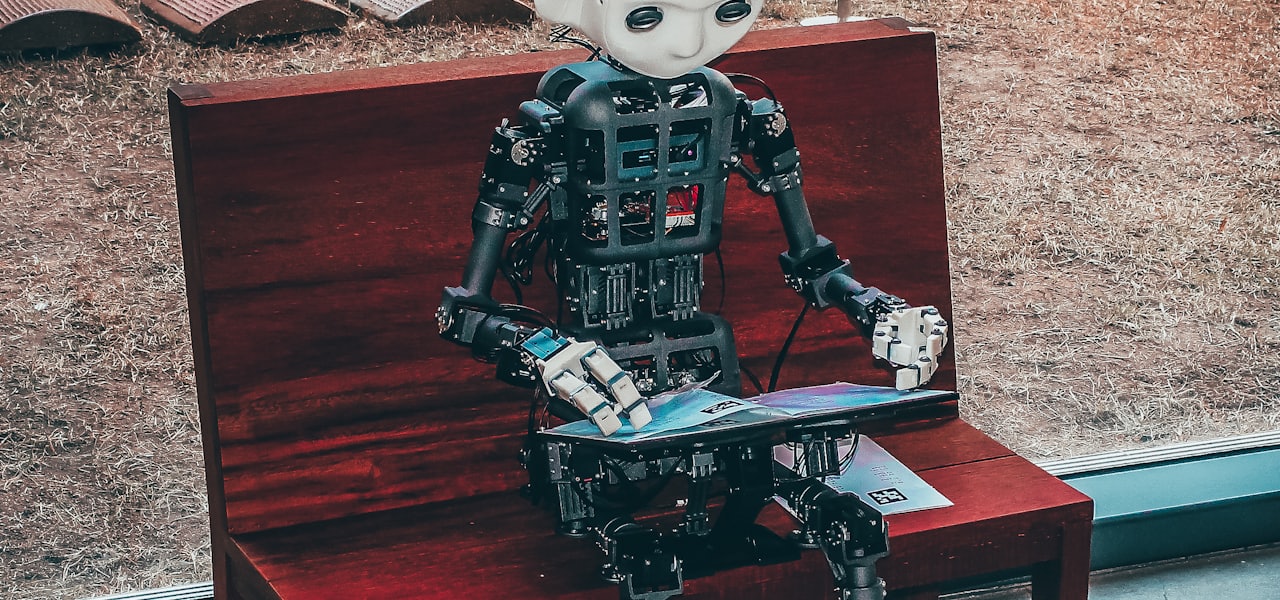
Pascale Fung (馮雁) (born in Shanghai, China) is a co-founder and Chief Research and Innovation Officer of AMI Labs, an artificial intelligence research company focused on world models. She is a professor in the Department of Electronic & Computer Engineering and the Department of Computer Science & Engineering at the Hong Kong University of Science & Technology(HKUST). She is the director of the Centre for AI Research (CAiRE) at HKUST. She is an elected Fellow of the Institute of Electrical and Electronics Engineers (IEEE) for her “contributions to human-machine interactions”, an elected Fellow of the International Speech Communication Association for “fundamental contributions to the interdisciplinary area of spoken language human-machine interactions” and an elected Fellow of the Association for Computational Linguistics (ACL) for her “significant contributions toward statistical NLP, comparable corpora, and building intelligent systems that can understand and empathize with humans”. She is a member of the Global Future Council on Artificial Intelligence and Robotics, a think tank of the World Economic Forum, and blogs for the Forum's online publication Agenda. She is a member of the Partnership on AI. She has been invited as an AI expert to different government initiatives in China, Japan, the UAE, India, the European Union and the United Nations. Fung's publication topics include spoken language systems, natural language processing, and empathetic human-robot interaction. She co-founded the Human Language Technology Center (HLTC) and is an affiliated faculty with the Robotics Institute and the Big Data Institute, both at HKUST. Additionally, she is the founding chair of the Women Faculty Association at HKUST. She is actively involved in encouraging young women into careers in engineering and science. == Career and research interests == Fung's work is focused on building systems that try to understand and empathize with humans. She has authored and co-authored hundreds of publications, along with many journal listings and book chapters. Fung is often found in the media, among others as a writer for Scientific American, the World Economic Forum, and the London School of Economics, and the Design Society. She was a pioneer in using statistical models for natural language understanding. Her PhD thesis proposed unsupervised methods for aligning texts and mining dictionary translations in different languages by distributional properties. She is an expert in spoken language understanding and computer emotional intelligence, and is a strong proponent of technology transfer. Fung has applied many of her research group's results in the fields of, among others, robotics, IoT, and financial analytics. Her efforts led to the launch of the world's first Chinese natural language search engine in 2001, the first Chinese virtual assistant for smartphones in 2010, and the first emotional intelligent speaker in 2017. == Honors == Elected Fellow, Association for the Advancement of Artificial Intelligence (AAAI), for “significant contributions to the field of Conversational AI and to the development of ethical AI principles and algorithms” Elected Fellow, Association for Computational Linguistics (ACL), for “significant contributions toward statistical NLP, comparable corpora, and building intelligent systems that can understand and empathize with humans” Nominee, the VentureBeat AI Innovation Awards at Transform 2020, for "AI for Good" Awardee, 2017 Outstanding Women Professionals & Entrepreneurs Award, Hong Kong Women Professionals & Entrepreneurs Association Elected Fellow, Institute of Electrical and Electronics Engineers (IEEE), for “contributions to human-machine interactions” Elected Fellow, International Speech Communication Association (ISCA), for “fundamental contributions to the interdisciplinary area of spoken language human-machine interactions" Member, Global Future Council on AI and Robotics, World Economic Forum (2016–) One of the Top 50 Women of Hope, selected by List Magazine in 2014 Selected as “My Favorite Teacher” by top engineering students in 2007 and in 2009 == Affiliations == Fung is affiliated with the following institutions and organizations: Hong Kong University of Science and Technology World Economic Forum Institute of Electrical and Electronics Engineers Association for Computational Linguistics International Speech Communication Association Association for Computing Machinery Association for the Advancement of Artificial Intelligence
Example-based machine translation
Example-based machine translation (EBMT) is a method of machine translation often characterized by its use of a bilingual corpus with parallel texts as its main knowledge base at run-time. It is essentially a translation by analogy and can be viewed as an implementation of a case-based reasoning approach to machine learning. == Translation by analogy == At the foundation of example-based machine translation is the idea of translation by analogy. When applied to the process of human translation, the idea that translation takes place by analogy is a rejection of the idea that people translate sentences by doing deep linguistic analysis. Instead, it is founded on the belief that people translate by first decomposing a sentence into certain phrases, then by translating these phrases, and finally by properly composing these fragments into one long sentence. Phrasal translations are translated by analogy to previous translations. The principle of translation by analogy is encoded to example-based machine translation through the example translations that are used to train such a system. Other approaches to machine translation, including statistical machine translation, also use bilingual corpora to learn the process of translation. == History == Example-based machine translation was first suggested by Makoto Nagao in 1984. He pointed out that it is especially adapted to translation between two totally different languages, such as English and Japanese. In this case, one sentence can be translated into several well-structured sentences in another language, therefore, it is no use to do the deep linguistic analysis characteristic of rule-based machine translation. == Example == Example-based machine translation systems are trained from bilingual parallel corpora containing sentence pairs like the example shown in the table above. Sentence pairs contain sentences in one language with their translations into another. The particular example shows an example of a minimal pair, meaning that the sentences vary by just one element. These sentences make it simple to learn translations of portions of a sentence. For example, an example-based machine translation system would learn three units of translation from the above example: How much is that X ? corresponds to Ano X wa ikura desu ka. red umbrella corresponds to akai kasa small camera corresponds to chiisai kamera Composing these units can be used to produce novel translations in the future. For example, if we have been trained using some text containing the sentences: President Kennedy was shot dead during the parade. and The convict escaped on July 15th., then we could translate the sentence The convict was shot dead during the parade. by substituting the appropriate parts of the sentences. == Phrasal verbs == Example-based machine translation is best suited for sub-language phenomena like phrasal verbs. Phrasal verbs have highly context-dependent meanings. They are common in English, where they comprise a verb followed by an adverb and/or a preposition, which are called the particle to the verb. Phrasal verbs produce specialized context-specific meanings that may not be derived from the meaning of the constituents. There is almost always an ambiguity during word-to-word translation from source to the target language. As an example, consider the phrasal verb "put on" and its Hindustani translation. It may be used in any of the following ways: Ram put on the lights. (Switched on) (Hindustani translation: Jalana) Ram put on a cap. (Wear) (Hindustani translation: Pahenna)
TAPPS2
TAPPS2 (Technische Alternative Planungs- und Programmier-System) is a tool used for developing the program logic for the universal, heating and solar thermal controllers by Austrian manufacturer Technische Alternative. Its primary usecase is defining the exact reaction of the controller to a certain event. Other than its predecessor, TAPPS, which could only be used to program controllers of type UVR1611, TAPPS2 is mainly used to program the UVR16x2 and RSM610 controllers, as well as several extension modules. == Development == Development in TAPPS2 is done on a vector-based drawing surface using components that can be placed via drag and drop. The components, which can be separated into inputs, functions and outputs are then being connected according to their individual features. Available components vary according to the current solar thermal control unit.
Teaspiller
Teaspiller was a US-based web application for customers to find accountants and hire them to do their taxes and accounting online. In 2013 the company was acquired by Intuit, Inc and added to its TurboTax product line. The Teaspiller employees and code were all acquired and the product was renamed as "TurboTax CPA select". It enabled accountants to work remotely with clients (share files, send secure messages, schedule appointments), as well as find new clients looking for their specific skills through a complex search algorithm. This was done through extended profiles containing licensing information, professional histories, user ratings, peer endorsements, association memberships, and practice areas. The service had been called an H&R Block killer by Business Insider as it helped customers find accountants to prepare tax returns online. As of 2011 it had 20,000 US accountants listed on the site. The application was built using the Django framework. == History == Teaspiller was built by Vemdara, LLC, a web company based in New York and founded in 2009 by Amit Vemuri (a former VP at Travelocity). The web application was launched in 2010. In 2013 the company was acquired by Intuit as part of their TurboTax product line and renamed as "TurboTax CPA select".
Teaspiller
Teaspiller was a US-based web application for customers to find accountants and hire them to do their taxes and accounting online. In 2013 the company was acquired by Intuit, Inc and added to its TurboTax product line. The Teaspiller employees and code were all acquired and the product was renamed as "TurboTax CPA select". It enabled accountants to work remotely with clients (share files, send secure messages, schedule appointments), as well as find new clients looking for their specific skills through a complex search algorithm. This was done through extended profiles containing licensing information, professional histories, user ratings, peer endorsements, association memberships, and practice areas. The service had been called an H&R Block killer by Business Insider as it helped customers find accountants to prepare tax returns online. As of 2011 it had 20,000 US accountants listed on the site. The application was built using the Django framework. == History == Teaspiller was built by Vemdara, LLC, a web company based in New York and founded in 2009 by Amit Vemuri (a former VP at Travelocity). The web application was launched in 2010. In 2013 the company was acquired by Intuit as part of their TurboTax product line and renamed as "TurboTax CPA select".
Ave!Comics
Ave!Comics Production is a privately owned French company editing comics on smartphones, tablets and computers. It was founded in 2008 and it is a subsidiary of Aquafadas, a software development company in digital publishing owned by Kobo Inc. AveComics is a comic book store for digital comic books that can be used on computers, tablets, and smartphones.(iOS, Android) Readers can buy and read comic books, manga and graphic novels in French, English and Spanish. AveComics uses a technology created by Aquafadas for comics transformation, distribution and reading, based around its AVE format. The AveComics application was also a finalist in the BlackBerry Innovation Awards 2009, in the "Entertainment" category. == Company history == Aquafadas, a company working on creative software for Flash, HTML5, photo, and video editing, created the application MyComics to allow the reading of comics on mobile in 2006. This application was made available in 2008, to enable the reading and storing of comics on iPhone and iPod Touch. A reading system adapted to low resolution screens was also available. In October of the same year, the company launched a comics library on both devices, in partnership with the Angoulême International Comics Festival, Fnac and SNCF. This library included the official selection of the festival, and was downloaded over 150 000 times. In December 2008 "The Adventures of Lucky Luke n°3", at Lucky Comics was published on both devices. The comic made a 50 000 € turnover. In April 2009, "Les Blondes" 10th volume was the top-selling comic for 10 months on the AppStore. After, in August 2009, the AveComics application was launched on iPhone, iPod Touch and BlackBerry. The company's website was launched in September when more than 100 titles were available on smartphones and computers. == Catalogue == AveComics works with over 80 international publishers including Glénat, Marsu Productions, Delcourt, Casterman, Soleil, Ubisoft, Les Humanoïdes Associés and Mad Fabrik. Comics such as "Assassin's Creed", "Talisman", "Titeuf", and "Seoul District" are sold by the company. == Award == Grand Prix Software Venture Capital - Senate 2008.
ImHex
ImHex is a free cross-platform hex editor available on Windows, macOS, and Linux. ImHex is used by programmers and reverse engineers to view and analyze binary data. == History == The initial release of the project in November 2020, saw significant interest on GitHub. == Features == Features include: Hex editor Custom pattern matching and analysis scripting language Visual, node based data pre-processor Disassembler Running and visualizing of YARA rules Bookmarks Binary data diffing Additional Tools MSVC, Itanium, D and Rust name demangler ASCII table Calculator Base converter File utilities IEEE 754 floating point decoder Division by invariant multiplication calculator TCP/IP client and server Support for: Data importing and exporting ASCII string, Unicode string, numeric, hexadecimal and regular expressions search Byte manipulation File hashing Plug-ins